Taste and See
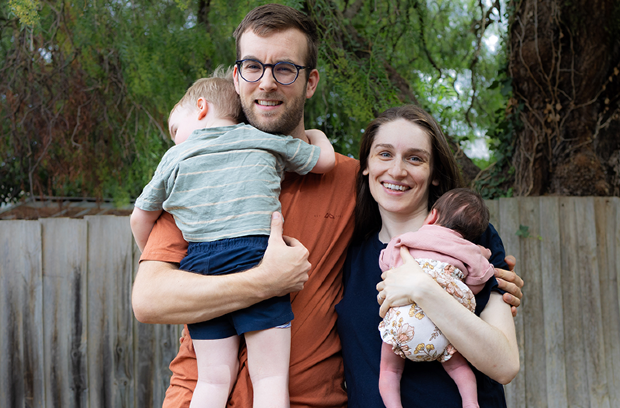
Kurt & Bec Langmead – Field Staff Lightning Ridge
Kurt & Bec Langmead’s heart for mission led them to the remote parish of Lightning Ridge in early 2020. It’s a place that attracts people who want to get away and it’s joked that there are more people listed as members of the Bowling Club than on the town census.
Kurt shares some of the exciting ministries they have seen develop during the past few years through the blessing of many partnerships.
Ministering in Lightning Ridge is a mission-like experience because of the remote location and Bush Church Aid (BCA) is an incredible support network for us. They send out approximately 20,000 copies of their prayer notes each quarter and we know people are praying for our family, church and community. There isn’t a month where we don’t get multiple emails, phone calls, and sometimes packages from people right around Australia. We also have formal partner churches including NorthLight Anglican Church in Sydney, who have been sending a Kids’ Club mission team to Lightning Ridge for 21 years. They know the kids and teens in our town almost better than we know them and it’s a testament to the value of long-term gospel partnerships. Heather Robinson, our Children’s Ministry Team Leader, is another blessing we received via NorthLight after she discovered that a faithful elderly church member who’d been our Scripture teacher died during July 2020.
Dinner
A newer partnership that has recently developed is one with Anglicare through their Community Care Program. For 18 months now we’ve been running Community Kitchen dinners on Tuesday nights, and they have become a midweek hub. We planted it out of prayer on Tuesday nights for the lost in our community and it was really intentional to create a space where Christians and non-Christians are sharing a meal together before our church members meet for Bible study. We have our Bible Discovery Group (Bible Disco) beforehand for newcomers which is a safe place where we sit in a circle, tell a Bible story and have a yarn before dinner. We use some of Christine Dillon’s—a Southeast Asian missionary—non-literacy based oral storytelling methods to reach across cultures in the Ridge with those who may not be able to read and who will feel intimidated by anything bookish. Telling a story and talking about it is something that we can do when connecting with people, particularly those who’ve come from rock bottom. Notably we’ve had a lot of isolated, single blokes who are doing it tough, living off the grid in difficult circumstances, join us. After the Bible Disco is a dinner for everyone that regularly hosts at least 20 adults and 10 kids. Last term we also started a mini ‘Bible Bites’ time over dinner with a song, a shorter version of the Bible story and a prayer for the kids.
An older man on a disability support pension who lives off grid on a camp with his two dogs says he started coming to Bible Disco and dinner because, “I was talked into coming along by a ‘pretty girl!” He wasn’t sure what he was expecting and adds, “Once I got there, I began to learn about the Bible and Bible history.” When asked what he gets out of Tuesday nights he answers, “Associating with other people, friendship. Otherwise, I’ll be sitting at home by myself. I don’t usually get out, unless it’s with you mob!” He has recently been re-diagnosed with cancer and reflects, “It was getting a bit over and above me.” As a pastor I’ve been meeting up with him each Friday afternoon to read a Christian resource that speaks to the issue of cancer and faith.
Part of our Community Kitchen project application to Anglicare was not just for funding for Tuesday nights but to extend that funding to other ways that we could use hospitality and open up our church to the community. Through an additional partnership with Mission Australia and Royal Flying Doctors Service (RFDS) we have been hosting some cooking workshops called ‘Let’s cook’. It’s a pilot project facilitated by our Local Drug Action Team, being delivered by RFDS over eight weeks predominantly to single mums or women on welfare or out of work. The participants are being taught how to prepare sustainable, healthy meals and each week they go down to our local community gardens to learn what’s in season and then shop for fresh ingredients and specials at our local IGA supermarket. RFDS provide funding for eight weeks and also deliver the content. Mission Australia is supporting by helping to deliver the classes and funding a cooking kit to go home with each of the eight participants, which includes a slow cooker, pots, pans and utensils, so they have resources to help them continue in their own kitchens. We’ve aligned the classes to run on a Wednesday when our weekly prayer meeting happens so we have an opportunity to interact with the participants and be a welcoming presence. Bec has been able to reconnect with a lady who’s been regularly in touch asking for prayer for her sick partner, which wouldn’t have been possible without the classes. Opening our church also provides people with access to some of our resources including Christian counselling mini books provided by Anglicare which cover topics like suicide, self-harm, domestic violence, children with special needs, dealing with loss and parenting amongst others.
Breakfast
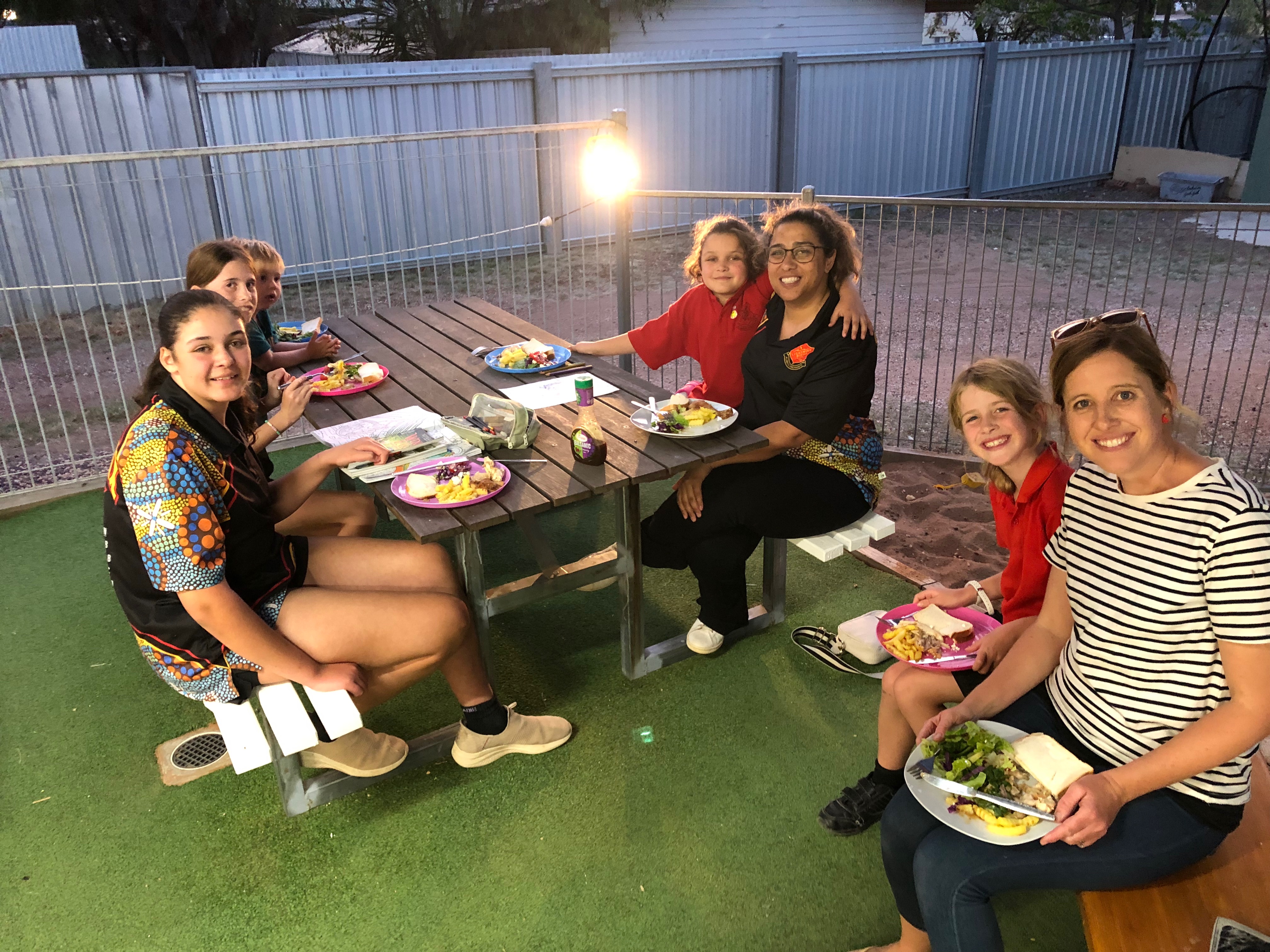
Another example of these partnerships in action is the brekkie club on Sunday mornings that we started earlier this year. We were trialling a half hour later time for the service and thought, “Why don’t we meet to pray at quarter to nine, and then at nine o’clock open up the kitchen where anyone is welcome.” The thing that’s been striking is that it is a brekkie club for all ages. Not only does it help local children, including some Aboriginal twins who’ve been riding their scooters to church, but we’ve also been getting a lot of the guys from Tuesday night turn up and have a couple of coffees and a bowl of Weet-Bix. As a minister, it’s created a second chance to touch base with our people which previously I’ve felt so rushed to do on a Sunday morning, especially when we have many visitors during the winter months. I’ve found the extra half an hour gives us a breathing space before church for me to see how the guys who I know have been having a hard week coming down off drugs are going, or to see if someone else is sober, or to check in with somebody who’s been struggling with mental health or whatever might be happening.
Most Sundays we have at least two or three people who only come for the breakfast or the morning tea. Anglicare’s Community Kitchen funding acknowledges this by helping us to provide the basics for breakfast and morning tea, knowing that this situation isn’t necessarily because these people aren’t interested. One lady shared with me that she doesn’t come to the service because of certain mental health issues. Still, she is growing and learning a lot more about Christianity, and what it means to be a Christian. She appreciates the fact that she has been accepted with her disability, and what she is capable of doing. She will often bring a plate of food to share at our gatherings where she’s connecting with Christians and has even started to sit in on the first part of Bible Disco! Recently we have been able to enjoy this lady’s hospitality at her house for lunch and dinner. She told us, “I love the community, love learning in community and being among people with values. I love how we’re feeding people who might not otherwise eat.”
Lunch
On the first Saturday in November our church will host a celebration lunch which will be the climax of the ‘Let’s cook’ course and we will present certificates offering our congratulations. We’re hoping to cater for about 100, with participants of the classes showing all they’ve learnt and me having an opportunity to say grace and add some words of thanks. It’s an example of how the Community Kitchen project has helped us gather up a few different trajectories and strands by creating an overarching umbrella that straddles my role as a pastor and community chaplain.
Sharing breakfast, lunch and dinner is not just something that’s been benefitting our community members, but it’s helping our church and our community to grow in the gifts and skills of grace, hospitality and love for neighbour. It’s been a bumpy road because it’s also generated conversation for our church members about what it’s like to love the outsider and people who are different to us. Our church looks, sounds and feels different to the way it did six or twelve months ago and that comes with challenges. The best complaint that I’ve had is that church is getting really noisy and messy. People are getting up and down during the service to smoke, drink coffee and stand or walk around because they can’t sit still for an hour and a half. There are also kids now making noise in the back of the church building and it’s a beautiful, beautiful mess. It’s created a healthy ongoing conversation about how we honour and respect our longest-serving members and show care for them, not presuming upon their hospitality, as we also seek to show grace to people who’ve never known anything other than just having to grab and take because that’s all life has been for them. We don’t want to enable a culture of entitlement or dependency, but we’re also trying to be realistic about where people are at so we’ve tried to be really intentional about tethering each of these meals to opportunities for bridges to be built to Christian community and the gospel of Christ.
Gospel culture
Psalm 34:8 says, “Taste and see that the Lord is good”. I want people to see that the church and the gospel is more than just meeting material needs, and actually builds bridges to Christ who satisfies our deepest hunger and deals with our deepest brokenness and hurts. In each of these different contexts we’ve been able to create spaces where not only our church members, but our wider community members are being given an opportunity to taste and see that the Lord is good. That’s very much in line with Christ’s own example in the gospels. He frequently shared meals, not only with his best friends, but also with the religious do-gooders, the sinners and the tax collectors. And he regularly used food as a picture of the kingdom: the heavenly banquet, my body, the bread, my blood, the wine, the bread of life and so on. Jesus himself modelled not just eating church morning teas with all the regulars, but expanding and opening wide the church to invite others to share meals and that’s been our model.
The thing that we’ve discovered in recent months is the fact that as the room fills with outsiders and not just insiders it can be tricky to maintain our baseline culture as God’s people. So many of our wider community are gathering around these meals and we’re not short of opportunities to share the gospel. We’ve realised how critical it is for Christians to be able to contribute to forming and maintaining a gospel culture in our gatherings. In small churches like ours, along with those in Walgett or Collarenebri or Wee Waa or Mungundi, one extra body in the room who loves Jesus and has a heart for the lost makes such a difference. As a Regional Director of BCA used to say, “Just one Christian for one or two years… it’s a disproportionate influence”. That’s why we haven’t stopped praying the Lord would keep sending or saving more.
Prayer points
- Give thanks for the ‘Community Kitchen’ partnership with Anglicare, and for the generosity of those who are supporting it financially and in prayer.
- Pray that the Tuesday night Bible Disco and dinners would continue to be a place where believers and newcomers can build friendships and gospel bridges around a common table.
- Give thanks for the ‘Let’s Cook’ cooking classes delivered by RFDS and Mission Australia; pray that they would help to support the physical, emotional and spiritual needs of our wider community.
- Give thanks for the way that our new pre-service brekkie club on a Sunday is helping people, young and old, try church for the first time.
- Give thanks for the generosity and hospitality of our long-term church members, and pray that the Lord would save or send others to join us.
- Most of all, pray that many would taste and see that the Lord is good, and come to share a seat round Christ’s heavenly banquet table.
This article was originally published by the Diocese of Armidale in The Link Issue 93 and is reproduced with permission